Men often suddenly discover round, bald patches on their scalp or beard, causing panic without knowing what's happening. Therefore, the causes of alopecia in men deserve in-depth understanding, as identifying the cause is the first step towards proper treatment. This condition is not merely a simple cosmetic issue; it's a genuine medical condition that affects a man's self-confidence and impacts his daily life.
At the First Specialist Medical Clinics Complex, the specialized dermatology clinic accurately diagnoses this condition and follows up with patients using well-considered treatment plans. The goal is not only to treat the external appearance, but also to understand the true root cause of the problem to prevent its recurrence.
What is alopecia?
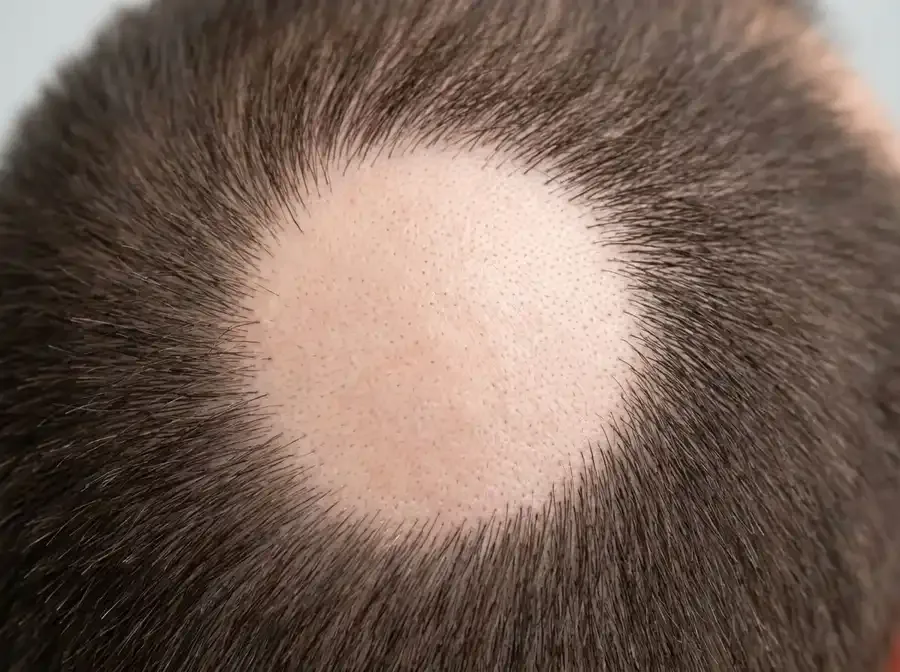
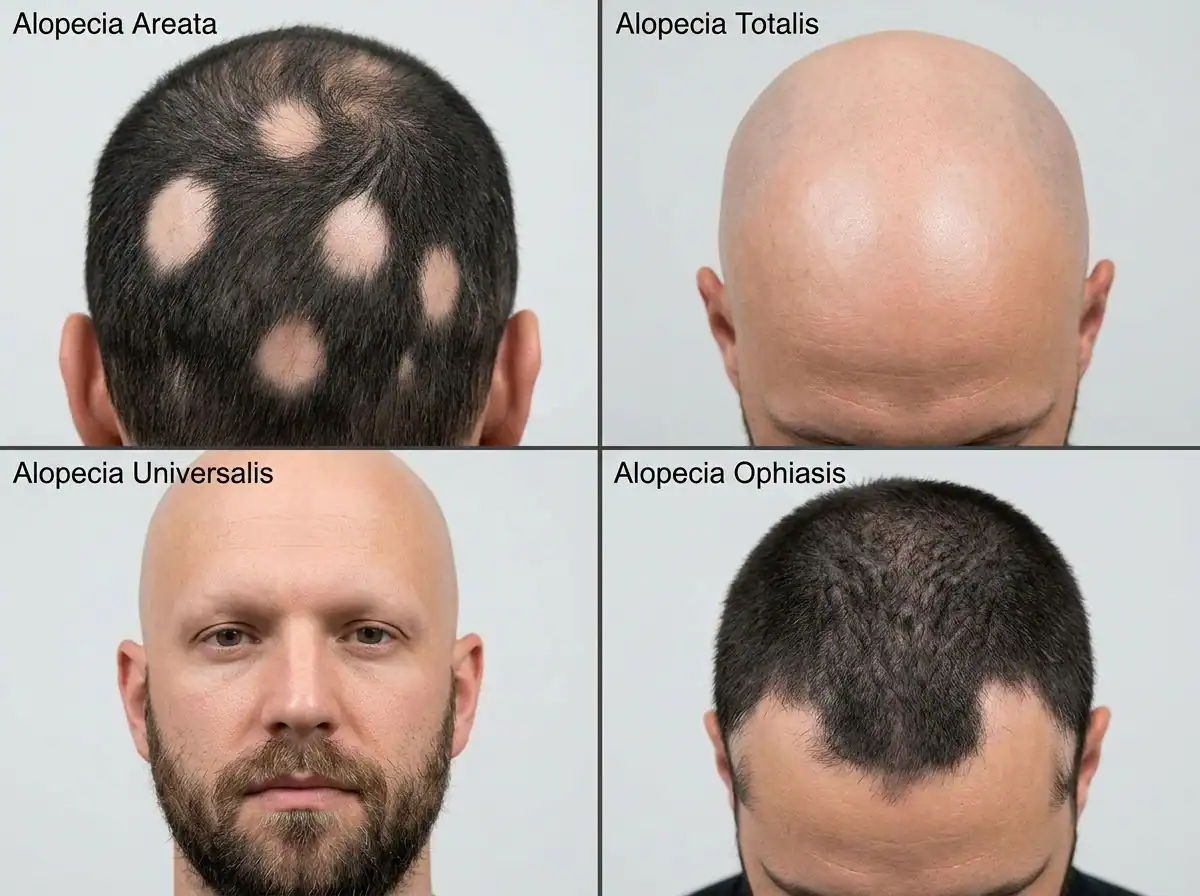
Alopecia areata—or what is medically known as alopecia areata—is an autoimmune condition in which the immune system mistakenly attacks hair follicles, believing them to be foreign cells that must be eliminated. This attack leads to a cessation of hair growth in the affected areas, resulting in smooth, round or oval patches of complete hair loss.
What's noteworthy here is that hair follicles don't die in most cases, but rather enter a dormant state. This means that hair can regrow if the condition is properly managed and treated promptly. In fact, many patients fully regain their hair after receiving the correct treatment.
Alopecia affects men, women, and children alike, but in men it takes on additional dimensions because it can affect the beard, eyebrows, and mustache, not just the scalp. This makes accurate diagnosis extremely important.
Types of alopecia
- Alopecia Areata: The most common type, it appears as scattered circular patches on the scalp or beard.
- Alopecia totalis: This involves the complete loss of all hair on the head, leaving not a single hair.
- Alopecia universalis: The most severe form, in which all body hair falls out, including eyebrows and eyelashes.
- Banded or borderline alopecia (ophiasis): extends in a band-like pattern along the edges of the head and responds more slowly to treatment.
- Alopecia barbae: Specific to men, it mainly targets the beard and chin area.
- Traction alopecia: caused by repeated pressure on the hair or tying it in a way that pulls it from the roots.
Book now for treatment for alopecia of the hair and beard
What are the main causes of alopecia areata?
- Autoimmune dysfunction: This is the primary underlying cause, where the immune system attacks healthy hair follicles without justification.
- Genetic factors: Having a family history of alopecia significantly increases the likelihood of developing it.
- Acute psychological stress: Emotional trauma or constant stress disrupts the balance of the immune system and accelerates the onset of symptoms.
- Associated autoimmune diseases: such as thyroid disease, type 1 diabetes, and vitiligo, which are closely related to alopecia.
- Viral infection: Some viruses are capable of triggering an abnormal immune response that targets hair follicles.
- Hormonal changes: especially disturbances in thyroid hormones or male hormones.
- A deficiency in essential nutrients, such as iron, zinc, biotin, and vitamin D, can weaken hair follicles.
Medical tests and procedures necessary to diagnose alopecia
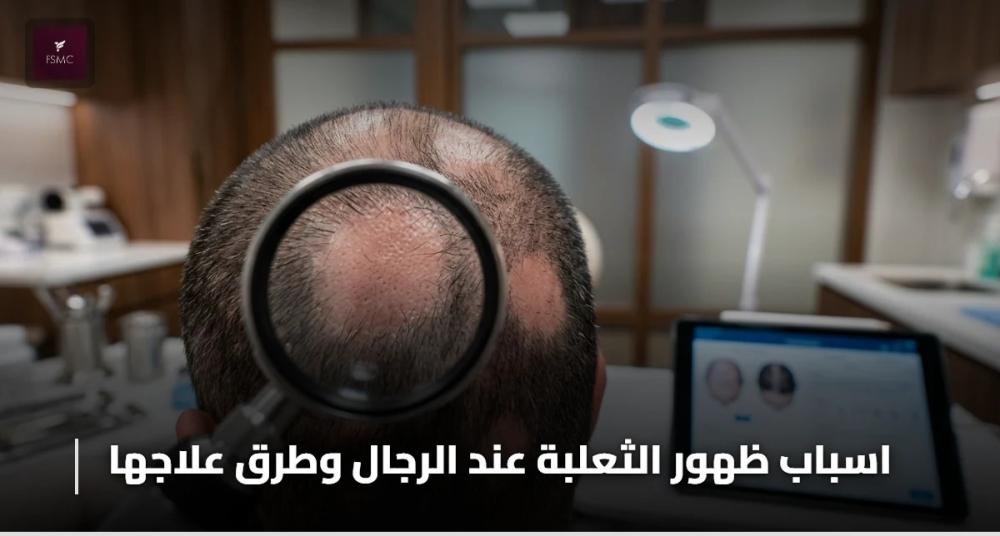
- Direct clinical examination: The dermatologist begins by examining the shed spots with his eye and a special magnifying glass to determine their shape and size.
- Pull Test: The doctor holds a small number of hairs and gently pulls them to see how easily they fall out.
- Trichoscopy: An advanced magnification device that reveals the condition of hair follicles and subtle changes in the scalp.
- Blood tests: These include measuring levels of iron, zinc, vitamin D, thyroid hormones, and immune antibodies.
- Scalp biopsy: In doubtful cases, a small sample of skin is taken for microscopic analysis to confirm the diagnosis.
- Assessing co-morbidities: Detecting any other autoimmune diseases that may be behind the appearance of alopecia.
What are the causes of alopecia in men?
The causes of alopecia in men specifically are characterized by some particular factors that deserve attention:
- Work-related stress: Men are more prone to certain patterns of chronic occupational stress that create an environment conducive to the development of alopecia.
- Male hormonal disorders: High levels of dihydrotestosterone (DHT) weaken hair follicles and make them more susceptible to immune attack.
- Excessive caffeine and nicotine consumption: common habits among men that constrict the blood vessels that nourish hair follicles.
- Neglecting a balanced diet: Relying on fast food deprives the body of essential elements for healthy hair.
- Sex-linked genetic predisposition: Some genes associated with alopecia areata are activated by male hormones.
- Delaying seeking treatment: Men often delay visiting the doctor, which allows the disease to develop and spread.
- Excessive physical exertion: Very intense exercise without adequate nutrition exhausts the body and weakens its immune defenses.
Symptoms of alopecia in men
- Smooth, round or oval patches: appear suddenly on the scalp, beard, or eyebrows.
- Itching or a slight tingling sensation: Sometimes the appearance of the spot is preceded by a slight, painless sensation in the affected area.
- White or very fine hair: may grow at the edges of the spot before it falls out completely.
- Faster than usual hair loss: The man notices large amounts of hair when combing or in the shower.
- The spots spread gradually: they may start with a single spot and then expand to include larger areas without treatment.
- Nail changes: In some cases, pits or fine lines appear on the nails, associated with alopecia.
- Impact on alopecia symptoms and its psychological treatment: Anxiety and social withdrawal are among the most prominent non-physical symptoms associated with the condition.
Latest medical treatments for alopecia
- Topical cortisone injections: The most commonly used and effective in moderate cases, they are injected directly into the affected areas every 4 to 6 weeks.
- Cortisone creams and sprays: used in mild cases and for those who refuse injections.
- JAK inhibitors (Baricitinib - Ritlecitinib): The newest approved drugs, administered orally, have shown impressive results in hair regrowth.
- Minoxidil solution: It stimulates blood circulation in the scalp and supports hair growth in conjunction with other treatments.
- Phototherapy (PUVA): Reduces the excessive immune response in the skin by exposing it to specific wavelengths of ultraviolet light.
- Difensipron (DPCP): A sensitizing treatment that stimulates the immune system and redirects it away from the hair follicles.
- Platelet-rich plasma (PRP) injections: These are injected into the scalp to activate dormant hair follicles and promote their growth.
These options represent the ultimate solution for alopecia when applied under the supervision of a specialized dermatologist.
ﻻ
Treatment options for alopecia in men
- Localized steroid injections: The first option that most dermatologists start with, effective in limited spots and gives visible results within weeks.
- Oral immunosuppressant drugs: such as methotrexate or cyclosporine in severe or widespread cases.
- Oral JAK inhibitors: The newest and most effective in cases resistant to traditional treatments, and are given under strict medical supervision.
- Platelet-rich plasma (PRP) therapy: A safe option that uses the patient's own blood to stimulate natural hair growth.
- Phototherapy: Suitable for those who do not respond to topical treatments and suffer from widespread scalp lesions.
- Integrated psychological follow-up: an integral part of the treatment plan, because psychological stress feeds the cycle of illness and slows down the response to treatment.
Achieving a permanent cure for alopecia requires adherence to the treatment plan and regular follow-up with a dermatologist.
Book your plasma session for hair loss now
Tips to reduce the risk of developing alopecia
- Effective stress management: Regular exercise, meditation, and sufficient sleep significantly and tangibly reduce immune stress.
- Following a diet rich in essential nutrients: iron, zinc, biotin and omega-3 fatty acids are essential for healthy hair follicles.
- Avoid smoking and alcohol: both damage blood circulation in the scalp and weaken immunity.
- Regular follow-up with a dermatologist: Early detection means faster and more successful treatment.
- Avoid mechanical stress on the hair: Athletes who wear tight helmets put themselves at risk of stress alopecia.
- Treating co-existing autoimmune diseases as soon as they are discovered: Controlling thyroid disease and diabetes reduces the chances of developing alopecia.
- Avoid medications that cause hair loss: Always consult your doctor before taking any new medication if you have a history of alopecia.
Frequently asked questions about the causes of alopecia in men
Is alopecia in men a hereditary disease?
Genetics plays a significant role, but it's not the sole determining factor. Having a parent or first-degree relative with alopecia increases the likelihood of developing the condition, but many men from families with no history of the disease also develop it due to immunological, psychological, or environmental factors. A gene alone is not enough to trigger the disease—a trigger is needed.
What are the causes of alopecia in young men specifically?
The causes of alopecia in young men are often a combination of academic and professional stress, irregular diet, chronic sleep deprivation, and genetic predisposition. Young men also tend to postpone seeing a doctor, believing the problem will resolve on its own, which allows the disease to progress and spread.
Is it possible to get rid of alopecia permanently?
Permanent remission of alopecia is possible in a significant percentage of cases, especially mild to moderate ones. Some men regain all their hair after a single course of treatment, and the alopecia may never recur. In contrast, severe cases such as alopecia totalis require continuous, long-term management. The key is early diagnosis and adherence to treatment under the supervision of a specialist.
Understanding the causes of alopecia in men is the first step towards dealing with it confidently and rationally, without fear or embarrassment. The condition is real, but treatment options are now more extensive and effective than they were years ago. If you notice any suspicious patches or unusual hair loss, don't hesitate to seek professional advice. At the First Specialist Medical Clinics Complex, the dermatology team provides a definitive solution for alopecia with accurate diagnosis and a comprehensive treatment plan. Contact them today and put your hesitation aside.